Online safety is no longer only a household or school concern. At a family event hosted by a multinational company in Casablanca Finance City, Cyber Sqool ran interactive activities for employees’ children on cyberbullying, screen time, inappropriate content and responsible online behaviour. The experience raises a useful question for HR leaders and schools: how can a short event become the start of continued learning?
Making online safety part of family wellbeing
Children use games and digital platforms to learn, communicate and have fun. Along the way, they may encounter cyberbullying, inappropriate content or interactions that make them uncomfortable. A company family day can create a practical space to discuss these experiences with children and caregivers.
At a Kids Day hosted by a multinational company in Casablanca Finance City (CFC), Cyber Sqool delivered online-safety activities for employees’ children. The company’s post says the workshops addressed cyberbullying, screen time, inappropriate content and responsible online behaviour. The company was not named publicly, so this article does not identify it.
Why bring online safety into a family event?
Safety rules are often presented as general advice: do not share personal information, do not respond to suspicious messages, and tell a trusted adult if something feels wrong. Children also need a chance to practise what they might do in a specific situation and to know they can ask for help without being blamed or punished.
UNICEF advises caregivers to stay calm, listen when a child describes a troubling online experience and reassure them that they are not to blame. These principles can guide activities involving children and their families. Read UNICEF’s guidance on supporting a child after a negative online experience.
Three activities that invite children to practise
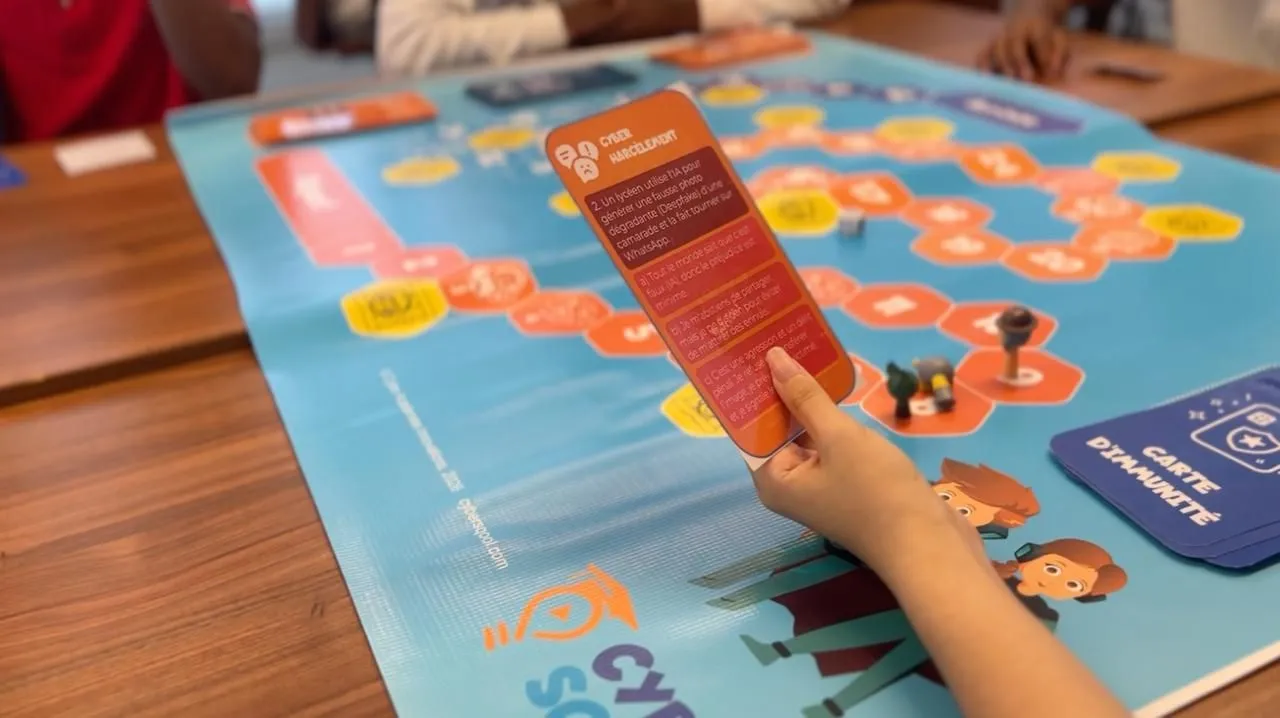
According to Cyber Sqool’s post about the event, the programme combined three activities:
CyberBoard: a board game that invites children to discuss digital situations and choose a response.
Participatory theatre: children watch or act out a scenario and discuss possible choices.
Educational escape game: an activity for older children, with puzzles built around a cyberbullying scenario.
These formats give children a chance to explain their thinking and compare options. An event alone cannot show that behaviour has changed or that a child is protected from harm. A short debrief after each activity can help children connect the lesson to everyday situations.
How organisers can make the event useful
Whether the organiser is an HR leader, school director or community group, the activity should have clear learning goals:
Choose a situation children may recognise, such as a hurtful group message or a request to share a photo or personal detail.
Give each activity one practical goal: pause before replying, save evidence, or reach a trusted adult.
Adapt the scenario to the children’s ages; an example for a young child may not suit a teenager.
Give caregivers a few questions to continue the conversation at home.
Make the route for seeking help clear, especially if a child discloses a real incident.
Protect children’s privacy. Photos and names are not necessary for an event to be valuable.
UNICEF’s guidance also recommends considering whether a platform, school or relevant authority should be contacted, depending on what happened. See the practical steps.
An event can start the conversation; continuity builds skills
A family day can introduce an important subject and encourage children and caregivers to talk. Skills need repeated opportunities to learn and practise at home and at school. A one-off activity should not be presented as a substitute for an ongoing school programme or a clear response process for incidents.
For companies, a Kids Day can include family digital-safety awareness in employee activities. For schools, interactive experiences can open the discussion and connect it to a year-round learning plan. Cyber Sqool describes its school programme in this school-safety blog section.
To discuss a safety-awareness day or request a programme presentation: contact@cybersqool.com · +212 611 106 915.
Cyber Sqool’s event source: the company’s LinkedIn posts.