For online-safety education to reach children, it needs to meet families in different places and connect practical advice with experience. The #ForGoodConnections roadshow combined games, activities and digital workshops across seven Moroccan cities. Here is what the published accounts say, and how schools and decision-makers can turn awareness into continuing learning.
Digital-safety education needs to reach children where they are
If children are to learn how to act safely online, awareness should not be limited to a single meeting or institution. Reaching children and families in different cities, and giving them a chance to discuss situations they recognise, can open a wider conversation about digital safety.
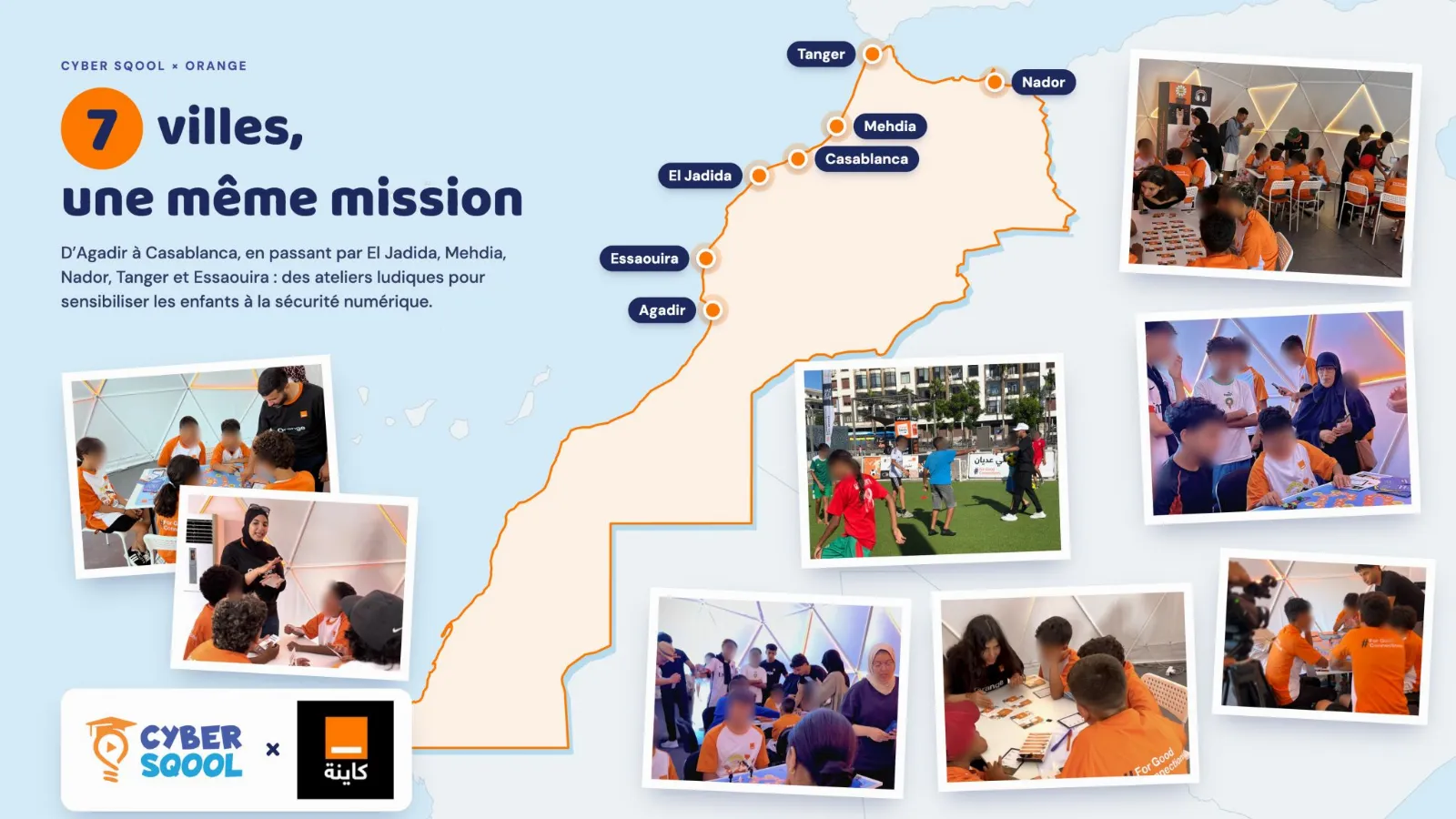
In a post about the #ForGoodConnections roadshow, Orange Maroc said the tour visited seven cities: Agadir, El Jadida, Mehdia, Casablanca, Nador, Tangier and Essaouira. According to the post, its “Héros du Numérique” pathway combined CyberBoard, a serious game and digital workshops to encourage safer, more responsible habits. Cyber Sqool’s post about its summer field activities also mentioned cyberbullying, screen time, responsible behaviour and risks related to artificial intelligence. Orange Maroc’s roadshow post · Cyber Sqool’s post on field activities.
Why should schools and decision-makers care about field outreach?
A travelling awareness workshop can reach children and families beyond the usual school setting. Geographic reach alone, however, is not enough. Each activity needs to suit participants’ ages, make its learning goal clear and show children where to seek help if something worries them.
School leaders can ask practical questions: did pupils only hear a rule, or did they practise applying it? Do families know how to continue the conversation at home? Is there a clear person or process a pupil can approach when they need support?
Different activities, one goal: a usable skill
Orange Maroc’s post says the #ForGoodConnections roadshow combined play and digital workshops. Cyber Sqool’s post about a Kids Day in Casablanca also mentioned CyberBoard, participatory theatre and an educational escape game. These formats can give children concrete situations to discuss and respond to.
After a scenario about a hurtful group message, for example, a facilitator can ask: What choices are available? Which trusted adult could help? How could you preserve evidence without resharing harmful content? An activity alone does not prove that behaviour has changed; children need follow-up and repeated practice.
Field outreach in the context of Digital Morocco 2030
These initiatives sit within a broader national context that includes digital skills and inclusion. Morocco’s Ministry of Artificial Intelligence, Digital Transition and Administration Reform presents “Digital Morocco 2030” as a framework for digital transformation. In 2025, the Ministry also announced a national programme to train children in digital technologies and artificial intelligence, with its first phase launched in 12 cities. Digital Morocco 2030 strategy · National programme for children’s digital and AI training.
This provides policy context, but the initiatives should be distinguished: the published sources about the Orange roadshow and Cyber Sqool activities do not say that the tour was part of the government programme or a partnership with it.
How can an institution turn an awareness day into a plan?
Schools, associations and companies can take practical steps to help the learning continue after an event:
Choose a clear digital scenario that fits the participants’ ages.
Set one practical skill to practise, such as pausing before replying or asking for help.
Give teachers and families prompts or guidance they can return to after the activity.
Explain how to seek help and report an incident while protecting the child’s privacy.
Revisit the topic later through follow-up activities and lessons.
Assess learning by asking children to apply a skill to examples, not just by counting attendance.
UNICEF recommends listening to children without blame and considering appropriate next steps based on what happened, which may include contacting the platform, school or relevant authorities. UNICEF guidance on supporting a child after a negative online experience.
From a roadshow to continuing learning
A tour across seven cities can open a conversation about digital safety with children and families in a setting that feels accessible. Building skills, however, takes continuity and cooperation between homes, schools and organisations that provide awareness activities.
For school leaders, an event can be the starting point for a year-round plan. For decision-makers and partners, field experiences can help reach different communities when they are paired with clear learning goals and a realistic way to assess what children have learned. Cyber Sqool presents its school programme of 297 digital-safety and digital-skills lessons.
To discuss an awareness day or request a programme presentation: contact@cybersqool.com · +212 611 106 915.