The school question is no longer whether students will encounter AI tools. It is how to help them understand these systems, use them responsibly and protect their privacy while doing so.
Why AI education belongs alongside digital safety
Children meet AI through chatbots, image generators, games and platforms that recommend content. Using these tools well requires more than knowing their names. Students need to ask how an answer was produced, what data they are sharing, when information should be checked, and when to ask a teacher for help.
UNESCO’s student AI competency framework sets out four connected dimensions: a human-centred mindset, ethics of AI, AI techniques and applications, and AI system design. It describes progression from understanding to applying and creating. This is guidance for education systems; it is not proof that any one program covers every dimension.
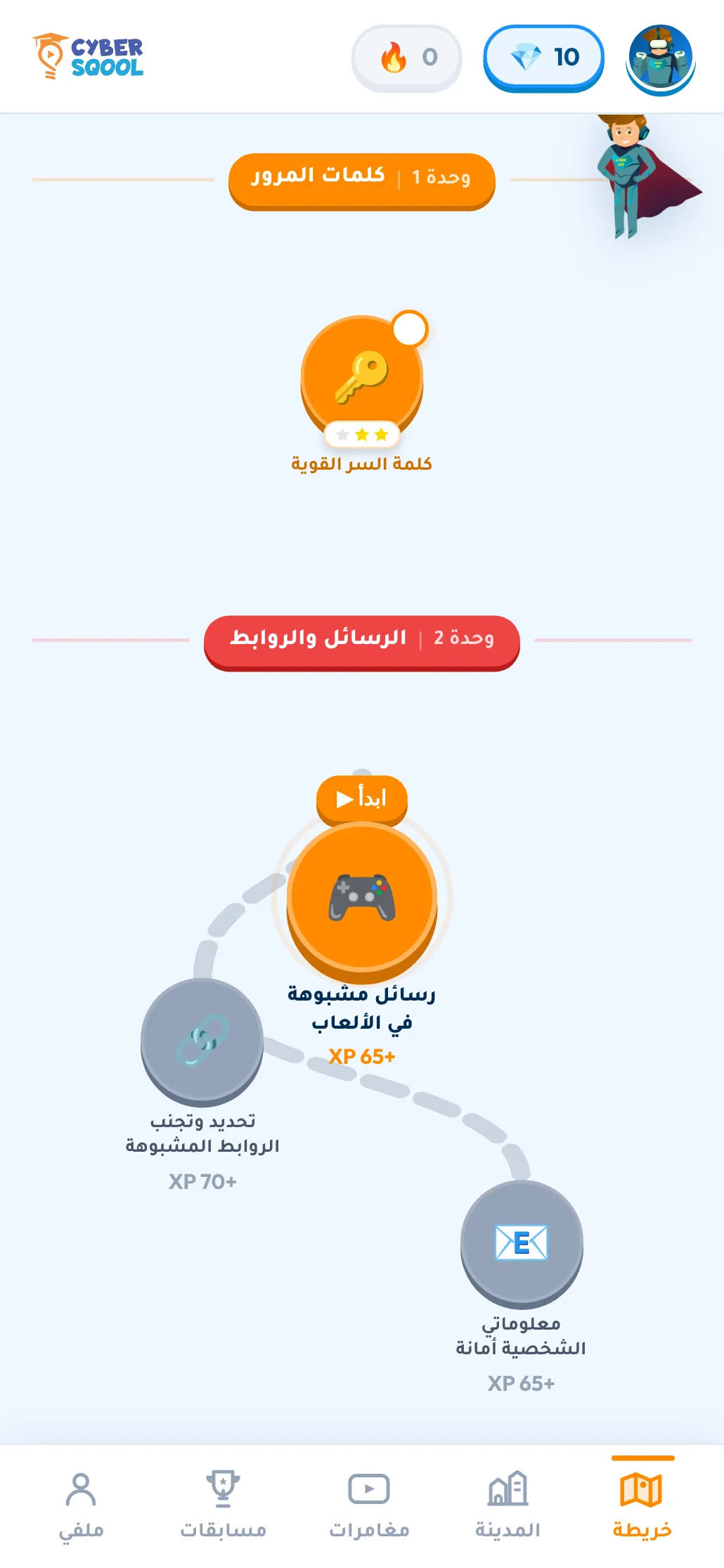
What is known about Cyber Sqool and Heuristic World
Heuristic World announced that its partnership with Cyber Sqool enabled part of its AI learning materials to be integrated into Cyber Sqool’s intensive training bootcamp in Morocco. Heuristic World describes its content as interactive AI and computer-science lessons and activities for learners aged 10 and up.
The public announcement establishes that part of the material was integrated into the bootcamp. It does not, by itself, specify the lesson titles or amount, or show that the content became part of every school’s annual program. School leaders should ask for the specific materials, intended age group, learning outcomes and assessment approach.
Move from using a tool to understanding it
A practical learning pathway can develop in three stages. First, students understand that AI outputs can be useful but are not guaranteed to be true. Next, they practise safe use: they avoid sharing their full name, address, passwords or private images, and verify important claims with a trustworthy source. Then they discuss how data, design choices and human decisions can affect a system’s output.
This connects AI literacy with digital safety: protecting data, checking content, understanding system limits and keeping human judgment in the decision.
Classroom activities school leaders can ask about
• How do students verify an AI-generated answer, and which independent sources do they check?
• What information should a child never enter into a public AI tool?
• How can students discuss whether an image may be generated or edited, while recognizing the limits of certainty?
• How can a tool support thinking without doing the learner’s work?
• What should a teacher do if an answer is misleading or the tool displays unsuitable content?
A teacher could show two sample answers—one supported by evidence and one containing an error—and ask students to investigate. Or the class can compare a safe prompt with one that reveals personal information, then decide what should be removed before submitting it.
A checklist for school leaders
Before adopting AI learning content, ask: Is it suitable for students’ age, language and local context? Does it teach privacy, verification and ethics, or only how to operate a tool? Are there activities that let students understand, apply and create progressively? How does the teacher guide the learning? What evidence will show that students gained a skill rather than merely watched a lesson?
Also request clear information about the tools or websites students will use, the data they may collect, age and account requirements, and how unsuitable content is handled. Do not enter real identifying information into trial tools without checking school policy and data-protection requirements.
A collaboration helps when the learning goal stays clear
Partnerships can expand what a school can offer: one organization may contribute AI and computer-science content, while another focuses on digital safety education. The value of collaboration depends on a clear curriculum, age-appropriate materials, aligned objectives, the teacher’s role and a way to review learning. A partner’s name alone does not establish a program’s quality or impact.
For school leaders, a practical first step is to request one sample lesson, review its objectives and materials, then ask teachers and students what they understood and what should be improved before expanding the pilot.
Sources
• UNESCO, AI competency framework for students: https://www.unesco.org/en/articles/ai-competency-framework-students
• UNESCO, overview of its AI competency frameworks for students and teachers: https://www.unesco.org/en/articles/what-you-need-know-about-unescos-new-ai-competency-frameworks-students-and-teachers
• Heuristic World’s announcement about integrating part of its materials into the Cyber Sqool bootcamp in Morocco: https://ae.linkedin.com/posts/heuristic-world_%D9%8A%D8%B3%D8%B9%D8%AF%D9%86%D8%A7-%D8%A7%D9%84%D8%A5%D8%B9%D9%84%D8%A7%D9%86-%D8%B9%D9%86-%D9%88%D8%B5%D9%88%D9%84-%D8%A7%D9%84%D9%85%D8%AD%D8%AA%D9%88%D9%89-%D8%A7%D9%84%D8%AA%D8%B9%D9%84%D9%8A%D9%85%D9%8A-%D8%A7%D9%84%D8%AE%D8%A7%D8%B5-activity-7424094847550197760-fxum
• Heuristic World’s profile and learning content for ages 10+: https://www.linkedin.com/company/heuristic-world