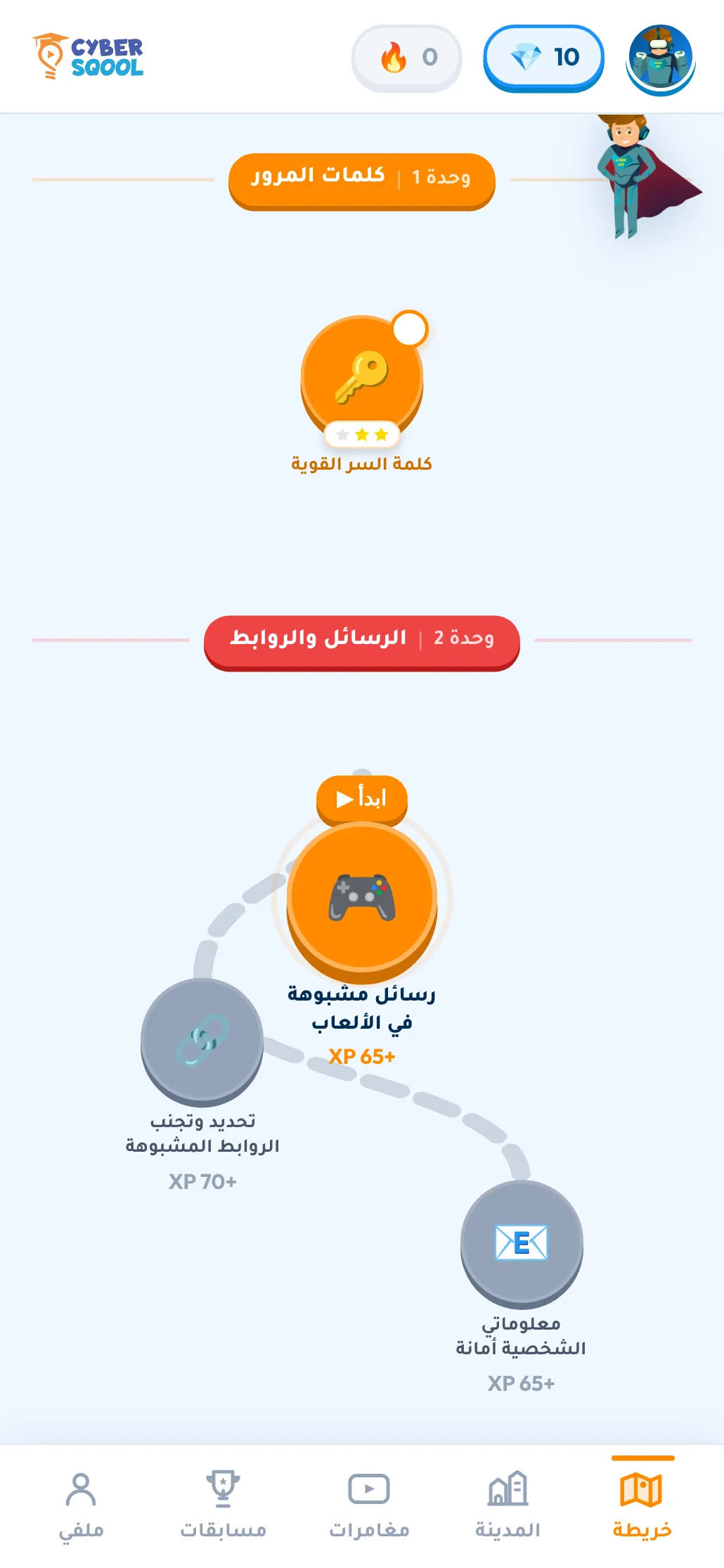
A child learning a new digital safety idea may be reading instructions, interpreting a scenario and remembering several rules at once. When demands pile up, the learner can spend more effort following the activity than understanding the skill.
What does cognitive load mean?
Cognitive load describes the demands a task places on working memory and attention. Working memory is limited. When learners must process many unfamiliar elements at once, it can become harder to connect ideas and retain the main point. This does not mean children cannot learn complex topics. It means the sequence and presentation matter.
How can it appear in a digital safety lesson?
Imagine a learner reading a long chat, spotting a suspicious link, remembering unfamiliar settings and choosing a safe response in one step. The interface and instructions may consume attention before the learner reaches the intended skill.
Five ways to make learning clearer
Set one clear learning goal. Break a task into short, connected steps. Begin with a familiar example, such as a message asking for a password. Model how to pause and check the sender, then let learners practise with a new scenario. Offer a hint or worked example when needed, and reduce support as learners gain confidence. Keep images, game features and extra text only when they help explain or practise the target skill.
What should school leaders review?
Ask to see a real lesson. Is its goal clear? Are the instructions appropriate to learners’ age and reading level? Can pupils explain why they chose an action, rather than guess? Does the teacher see where learners struggle? A small pilot with teachers and pupils can reveal confusing wording or unnecessary steps before wider use.
For digital safety, a useful question is not only whether an activity is engaging, but whether the learner can apply the idea when the situation changes. These are design principles, not a guarantee of results; activities should be reviewed with learners.
Cyber Sqool works with schools on digital education; institutions can discuss their needs at https://cybersqool.com/contact.
Further reading
LearnLab, Cognitive Load: https://learnlab.org/mediawiki-1.44.2/index.php?title=Cognitive_load
Marcus, Cooper & Sweller, Understanding Instructions (1996): https://learnlab.org/research/wiki/images/e/e9/1996_Marcus.pdf